

 May 6, 2025
 4 min read
 Share
Roadway maintenance provides for ongoing intended safety. However, safe driving practices are also necessary for accident prevention as developing roadway deficiencies cannot always be predicted.
Roads experience wear and tear from constant use, weather conditions, and environmental factors that require repair and maintenance to function efficiently and safely. The maintenance of roadways is an important role of public and private owners and involves scheduled efforts that preserve or improve the quality of roads. Maintained roadways can provide reasonably safe conditions of use by drivers, cyclists, and pedestrians who are complying with the laws of the road. Roadway maintenance is one component that aids in improving traffic flow, minimizing hazards, and reducing accidents.
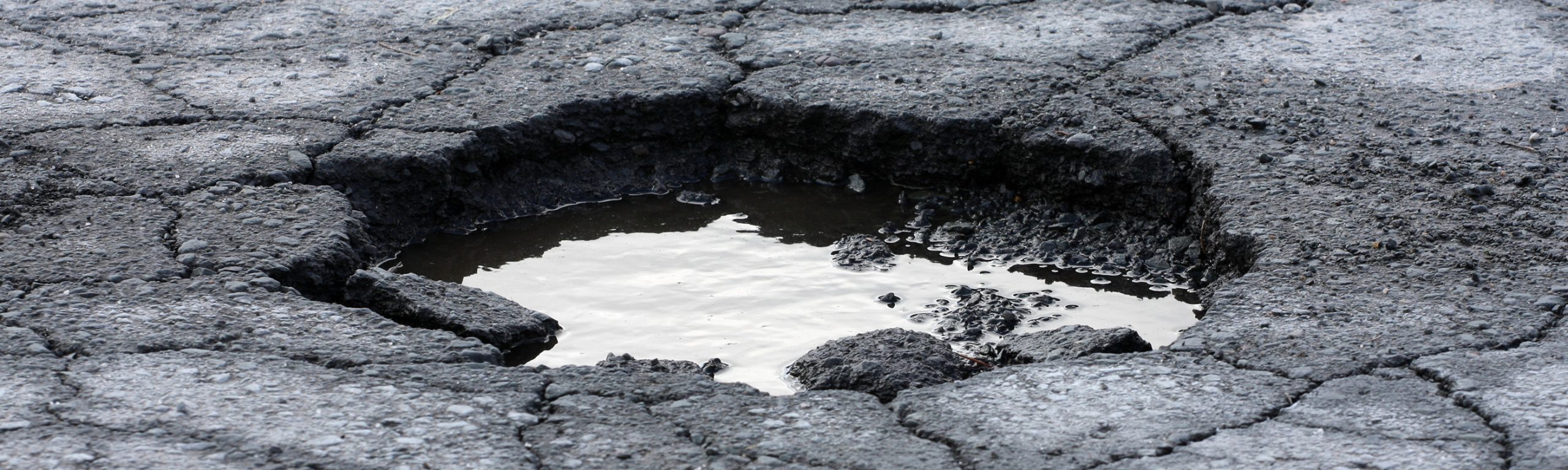
Roadway surface materials, most commonly asphalt and concrete, deteriorate from continual loading from vehicles, exposure to rain, snow, the sun, freeze-thaw cycles, and the natural aging of materials. This deterioration can lead to safety hazards, including uneven surfaces, cracks, and potholes, which can damage vehicles and increase the likelihood of accidents. For example, potholes can cause vehicles to lose control or swerve unexpectedly, leading to collisions or accidents. Likewise, cracks in the road can allow water to leach into the surface causing additional damage, more so during freezing temperatures.
Additionally, poorly maintained roads may have worn or faded lane markings, faded road signs, and/or poor lighting at intersections that can confuse or make it difficult for drivers, cyclists, and pedestrians to navigate roadways during inclement weather conditions or at nighttime. These deficiencies may lead to wrong turns or failure to stop at intersections. Therefore, road inspections provide a benefit in identifying issues before they become dangerous. Roadways with clear lane markings, signs, and illuminated intersections help reduce confusion and enhance safe travel within the roadway to assist in preventing accidents. Certain roadway locations require guidance, and when this is deficient there is an increased risk of driver error.
In general, roadway maintenance is categorized into two types, preventative maintenance and corrective maintenance, which keep roads functional and safe. While preventive maintenance concentrates on maintaining road quality prior to encountering significant issues, corrective maintenance addresses issues after they develop.
Examples of preventative maintenance are regular inspections, sealing cracks, resurfacing, and applying protective coatings to the road surface. This is a lower-cost type of maintenance that is utilized to aid in extending the lifespan of a roadway and improving safety by preventing minor issues from evolving into potentially dangerous problems. For instance, crack sealing prevents water from entering the road foundation, which can cause further deterioration and/or become potholes over time. Roadway owners/maintainers use this maintenance as a means to reduce the probability of accidents caused by road deterioration by performing these tasks proactively. Corrective maintenance is necessary when roads show signs of significant wear and require more extensive repairs such as repairing damaged road signs, pothole filling, resurfacing, and road rebuilding. These maintenance tasks are performed for restoring roadway safety and are typically more costly than preventative maintenance. Timely repairs can prevent further damage and ensure that roads remain a safe travel way for drivers and pedestrians.
Roadway maintenance is an essential component for roadway safety. Roadway owners/maintainers investing in both preventive and corrective maintenance along with regular inspection will reduce the risk of roadway accidents for drivers, cyclists, and pedestrians. Regular inspections and preventative maintenance help to identify and address issues before they become safety hazards. However, it should be understood that developing conditions of a roadway cannot always be predicted or immediately remedied.
If you have a matter involving a roadway accident where road conditions come into play, CESI can help.