
 February 18, 2026
  4 min read
  Share
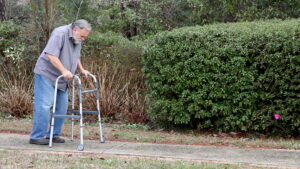
Share Biomechanical Engineers apply mechanical principles to biology and human physiology. They explain the dynamics of biological systems and how those systems behave under loads and stresses. By understanding the biological systems of the human body (cells, tissues, organs, body systems) they can interpret and explain how those systems incur injury. It is important to define injury. Injury is the damage to a biological system in response to a load or stress. For example, a young child walking and falling forward may scrape a knee, and depending on the fall they can have a contusion or just a simple scrape with no significant injury, fracture, or ligament tear. However, if an 80-year-old person has the same fall in the same manner, the result may be different. A senior adult can have fractures in their leg or hip as well as other ligament or tendon injuries.
The reason behind this is as one ages the biological systems of the human body change, some become weaker while others become stronger. For example, muscle mass increases as a person grows and then plateaus, and strength may decrease as a person gets older. In addition, not all individuals have the same development and genetics.
It is important for biomechanical engineers to understand injury causation and familiarize themselves with biological system injury thresholds. However, a reasonable biomechanical analysis involves not only the dynamics of the accident and the magnitude of the forces, but considers how to analyze the specific injury and parameters that may cause that injury. Not all individuals will have the same threshold of injuries. Injury of biological systems is not linear and the manner of how they fracture, tear, fail, or strain would not be the same even if comparing the same systems of different people. For example, research has been done on failures of femurs under loading and the ranges of the loading to produce failure varied from 4.2 to 17.1 kNewton with no apparent baseline force for a minimum force of fracture. Thresholds of injury cannot be generalized and each biomechanical injury investigation has to be treated as an independent case, because the threshold of injury for a specific person cannot be assessed in order to determine categorically that the threshold was met or not met as a result of an accident.
This does not mean that all accidents produce injuries; people have walked away without injuries from high-speed collisions or severe falls, while others have been injured in low-speed accidents and low height falls. In order to understand injury causation, the medical records have to be analyzed in combination with the description and dynamics of the accident in order to determine if the parameters for injury are present and consistent with biomechanical engineering principles. A biomechanical engineer should be able to not only understand mechanical principles, but how to apply those principles to the biological systems. In order to perform that analysis, the physiology and anatomy of those systems have to be understood as well as other biological interactions that may strengthen or weaken such systems. Injury causation should not be just identifying a specific value of delta V or acceleration (g), but a full analysis of the injury with the dynamics of the accident. Not knowing the specific threshold of biological system does not mean that all injuries will be consistent with the accident or that the injury is acute or traumatic, a biomechanical engineer should be able to analyze, interpret, and express if the injury was or was not consistent with a traumatic event.
At CESI, our experts bring over 20 years of experience in accident analysis and injury causation. We do not rely solely on a single value, threshold, or magnitude to determine whether an injury has occurred. Instead, we conduct a comprehensive and methodical investigation of each case.
Our approach integrates detailed accident reconstruction, biomechanical analysis, medical record review, and a thorough evaluation of the forces and dynamics involved. By examining the full context of an incident—rather than focusing on isolated metrics—we provide well-supported, objective conclusions regarding injury causation.
This rigorous, evidence-based methodology ensures that our findings are accurate, defensible, and grounded in sound scientific principles.
If you are interested in finding out what a Biomechanical assessment can do for your case feel free to reach out for a no cost evaluation. (610) 296-2250