

 September 26, 2025
 3 min read
 Share
In our last newsletter, Ron Cohen presented an article on driver distraction related to the design of the control systems within our cars. In this article, I delve deeper into touch screen technology and safety.
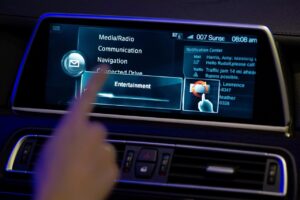
The move toward touch screen controls in our vehicles is not only a distraction, but the screens require the driver to look away from the road to interact with their vehicles.
Tesla cars are a good example of this. Nearly every function needed by the driver is controlled by a center-mounted touch screen. Tesla has removed nearly every button and knob. This requires the driver to look away from the road and work through menus to adjust the temperature or the radio. There is no haptic feedback, to give the user’s finger a feeling of motion, so the user must look at the screen to determine if they have selected the correct menu option. Many vehicles offer some level of voice control but often it has limited functionality. Some respond to casual conversation or even the radio or podcasts, certainly adding to the distraction. Voice controls can misunderstand speakers, resulting in frustration and thereby reducing attentiveness.
When using buttons that depress when pushed, or knobs that click when rotated, there is no need to look. Each knob or button has a specific location in the vehicle and only serves one purpose. Reach and turn or reach and press. Therefore, being familiar with your vehicle, the need to divert your attention from the roadway is reduced.
With a touch screen, each “button” location can have many purposes, each dependent on the screen that is active at the time. For younger drivers that have grown up with tablets and cell phones, this is very attractive, as it imitates many of the other devices in their lives, but it does require looking away from the road to operate the controls.
For an automobile manufacturer, there are cost savings related to the removal of gear shift levers, pushbuttons, and knobs. With touch screens, updates and changes are only a software update away. For sister and clone vehicles, GMC and Chevrolet trucks for example, brand differences exist only in the software and a few badges. More commonality among parts simplifies production and simplifies the supply chain.
Auto makers are already talking about “Software Defined Vehicles.” Vehicle options and performance packages are no longer defined by the hardware at purchase. The hardware will be in all vehicles. Seat heaters and higher performance modes can be made available through subscription services. All affected seats will have heaters, but you will need to buy the software button that turns the heater on. This would create a new revenue stream for the automaker.
Looking into the future, mechanical controls such as gear shifters are obstacles to autonomous driving. Replacing these mechanical devices with push buttons or software buttons removes these mechanical obstacles, easing the way for self-driving vehicles. But all of these changes that focus on more computer control of our vehicle, or the ability to add and delete features at will forget one key element of driving. Regardless of the method of controls, we need to keep our eyes on the road for our safety and the safety of others. Automotive design should include the methods and means to reasonably accomplish this driver safety protocol.
If you have a matter that may involve distracted driving, contact us for assistance.