
 February 14, 2024
  4 min read
  Share
Share The mission of the National Safety Council (NSC) is “to educate and influence society to adopt safety, health, and environmental policies, practices, and procedures that prevent and mitigate human suffering and economic losses arising from preventable causes.” The NSC Accident Prevention Manual for Business & Industry explained, “Designing for safety can be defined as the application of the concepts of safety through design to processes, the workplace, work methods, and products to achieve a state of operation for which the risks are judged to be acceptable. Risk is defined as a measure of the probability that a hazard may cause an incident and the severity of the adverse effects. Risks are acceptable if they are judged to be tolerable. For any company operation to succeed, its risks must be acceptable.” Based upon the NSC practices, systems have been identified and implemented for a variety of environments, and standards have been created for various work sites, activities, sports, and other means of physical entertainment.
However, we live in a changing world. Individuals become more creative with their activities and their entertainment. Customary safety systems sometimes lag in providing the detection and implementation of procedures or devices that may be necessary to protect the users. For example, during the COVID outbreak, child day care and preschool institutions wanted visitors to take their shoes off and wear only socks or shoe coverings to walk within the building. However, some of these buildings had wood or other smooth surfaced stairs and floors without carpets. Therefore, wearing socks on a smooth surface floor would expectedly result in an increased incidence of slips and falls on floors and stairs, especially during descent. These slips occur because of the change in frictional resistance from a shoe outsole to socks, which results in a decreased traction between the stepping foot and the flooring. In order to assess whether an operational change, like requiring the removal of footwear created a hazard, biomechanical engineering principles are necessary to evaluate the conditions of use, the changes in use, and alterations of the structure.
Biomechanical Engineering is the application of mechanical engineering to the human body. Biomechanics is used to analyze how the body may be injured as a result of applied forces and stresses during certain mechanical functions like walking. Biomechanics also studies how the body moves and how those motions interact with the environment. Biomechanical engineering principles should be used to analyze how the user is interacting with systems and catalog the potential hazards of those interactions.
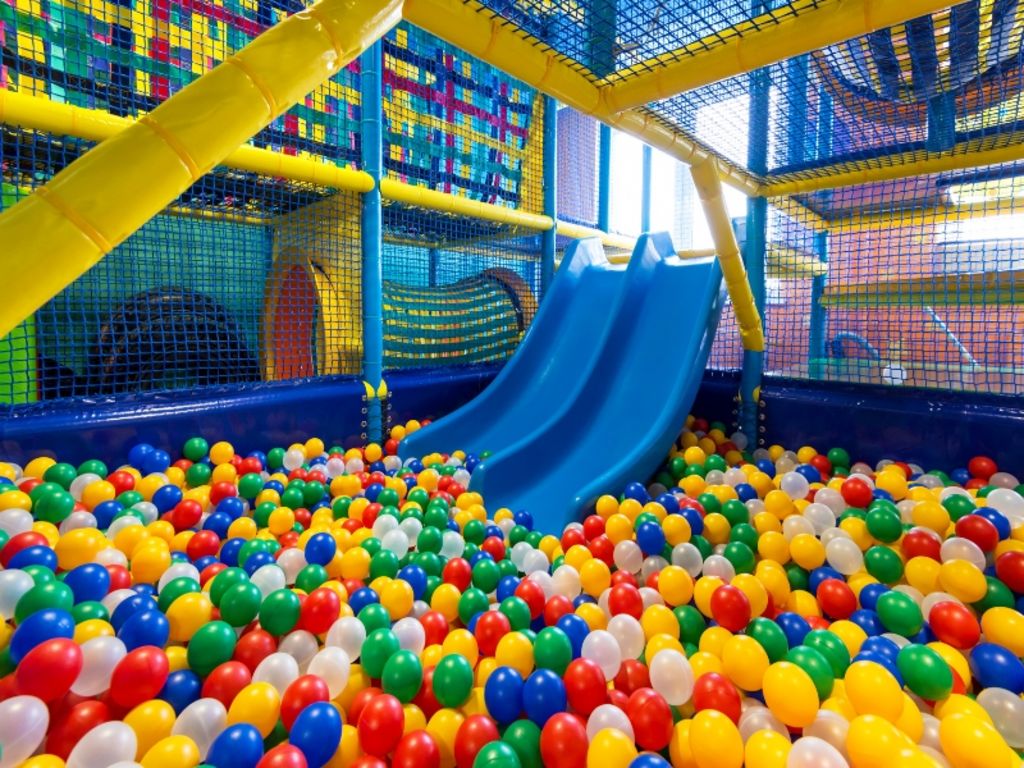
An example is a ball pit for children. A ball pit depth of 4 feet may be safe for children to jump from a platform if they are below a certain height and certain weight. But when that same ball pit is used by a larger adult to jump in, the adult is taller and heavier than the child and, therefore, an adult would not get the same dampening control and injuries can occur. A biomechanical engineering safety analysis is necessary to evaluate whether the entertainment environment reasonably mitigated the risk of user injury. Biomechanical principles and the engineering hierarchy for safety should be utilized during facility/product design, like novel entertainment systems, and for construction and operation to analyze the interactions of users and identify and implement risk prevention or mitigation for the age/size range of users.
Absent eliminating the hazard, at the very least it is warranted that institutions provide a warning. A warning does not eliminate a hazard. However, a warning provides an opportunity to recognize that a hazard is present, identifies the hazard, and defines the methods or means to avoid the hazard. Biomechanical principles can be used to identify how users will observe, perceive, and interact with those warnings. [Reference the ANSI Safety Color Code – Z535.1 and ANSI Environmental and Facility Safety Signs – ANSI Z535.2.]
If you are involved in a matter regarding a recreational activity injury, a biomechanical review may be beneficial to your case. Contact us to discuss your client’s injury or potential liability.